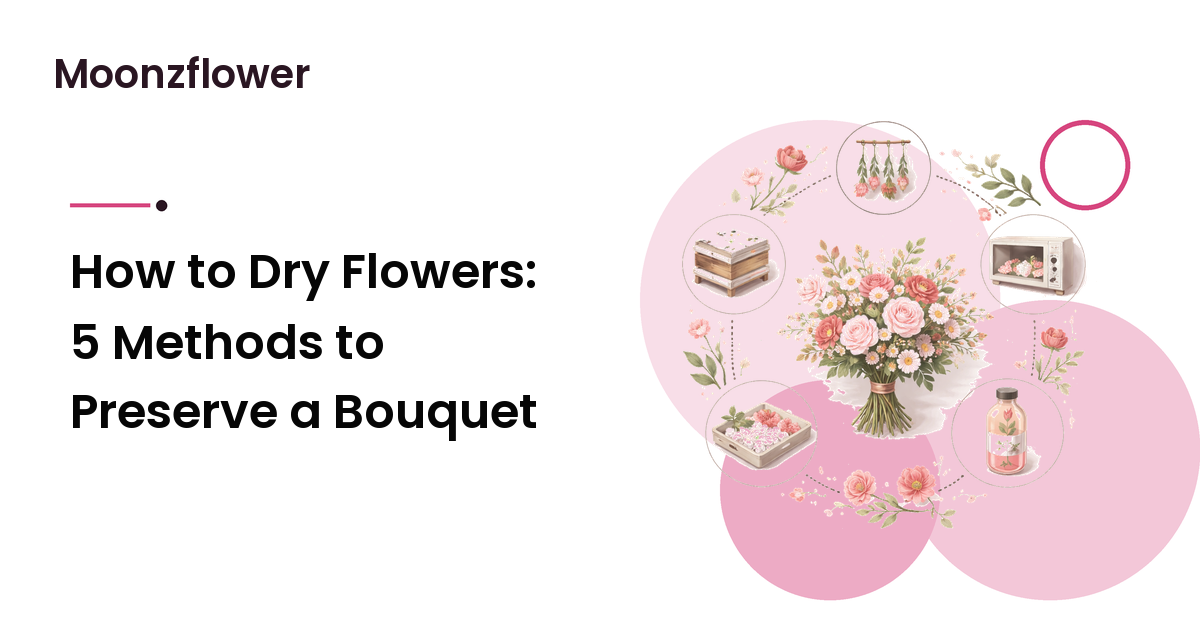
A dried bouquet is the closest thing flowers have to a memory you can keep on the shelf. The wedding posy, the birthday roses, the lavender from a summer walk — all can keep their shape and much of their color for months or years if you dry them well. The secret is less about clever technique than about timing and matching the method to the flower. Catch blooms near their peak, choose the method that suits their structure, and you sidestep the usual disappointments: brown, shriveled, crumbling stems.
Here is the short version. Air-drying is the easiest and needs nothing you don't own. Silica gel keeps color and shape best. Pressing is for flat, framable flowers. The microwave is the fast track. Glycerin keeps foliage soft, not brittle. Choose by the result you want, not by habit.
Start Before They Wilt: Choosing and Prepping Flowers
The single biggest mistake is waiting until a bouquet is already fading. Flowers dry in whatever state you start them in, so a wilted stem becomes a wilted keepsake. Begin when blooms are just short of fully open and still firm.
Some flowers dry far better than others. The dependable performers — the ones florists reach for — hold their color and structure as they lose moisture:
- Roses, lavender, and statice
- Strawflower (helichrysum), globe amaranth, and celosia
- Baby's breath (gypsophila), yarrow, and hydrangea
- Eucalyptus and other firm foliage
Thin, high-water flowers like tulips and most lilies are harder and often disappoint unless you use silica gel. Whatever the method, do three things first: trim the excess lower foliage (leaves shrivel and can trap mold), pat the petals dry if they are damp, and pull out any bruised blooms.
Method 1 — Air-Drying (the reliable default)
Air-drying is the classic hang-and-wait approach — the right first choice for sturdy stems and whole bouquets, because it costs nothing and asks only for patience.
- Strip the lower leaves and gather stems into small bunches of five to ten — they dry evenly and are far less likely to mold in the middle.
- Bind the stems with a rubber band, not string. Stems shrink as they dry, and a rubber band tightens with them so nothing slips loose.
- Hang the bunch upside down in a dark, dry, well-ventilated spot — an airing cupboard, a wardrobe, or a quiet corner away from windows.
- Wait two to three weeks, until the stems snap rather than bend.
Two details do most of the work: darkness and airflow. Light bleaches color as flowers dry — a sunny window ruins them — while ventilation prevents the damp, stagnant air that breeds mold. Hydrangeas are the happy exception: they dry best by "water drying," left in a vase with an inch of water that you simply let evaporate.
Method 2 — Pressing (for flat, framable flowers)
Pressing trades three dimensions for two, and it is the method to choose when you want flowers for framing, cards, or resin art. It suits flat or single-layer blooms — pansies, cosmos, daisies, ferns, and single petals — far better than dense, round flowers, which flatten into a shapeless blob.
The low-tech version still works best. Lay the flowers between two sheets of parchment, slide them into the pages of a heavy book, and stack more weight on top. Leave them two to four weeks, swapping the paper after the first few days to draw out moisture and prevent browning. A dedicated flower press does the same job with more even pressure; for a faster route, use the microwave method below.
Method 3 — Silica Gel (for full color and true shape)
When you want a rose to still look like a rose — round, full, and vivid — silica gel delivers. It is a desiccant that pulls moisture out quickly while supporting each petal, so blooms keep their three-dimensional shape and hold color better than any other home method.
- Pour a base layer of silica gel crystals into an airtight container.
- Sit the flower head upright on the layer, then gently spoon more gel around and between the petals until the bloom is fully buried and supported.
- Seal the container and wait — roughly two to four days for small or thin flowers, up to a week for dense blooms like roses and peonies.
- Pour the gel off slowly and dust the petals clean with a soft brush.
The gel is reusable: dry it in a low oven when it changes color and it is ready again. The trade-offs are cost and capacity — you can dry only as many blooms as the container holds — but for a few keepsake flowers, nothing else comes close.
Method 4 — The Microwave (the fast track)
When you cannot wait weeks, the microwave compresses drying into minutes. There are two approaches: for flat flowers, use a microwave flower press or two parchment-lined ceramic tiles; for round blooms, half-bury the flower in silica gel in a microwave-safe bowl. Either way, work in short 30-second bursts on a low setting, let everything cool between bursts, and stop the moment the petals feel papery. The risk here is heat: overdo it and colors scorch and brown. It is for speed and small quantities, not a whole bouquet.
Method 5 — Glycerin (for soft, lasting foliage)
Every other method leaves flowers brittle. Glycerin does the opposite: it replaces the water inside the plant with a solution that keeps stems and leaves supple, so they never turn dry and crumbly. It is the trick behind the soft, long-lasting eucalyptus and magnolia foliage in year-round arrangements.
Mix one part glycerin to two parts warm water, stand freshly cut stems in a few inches of it, and leave them somewhere cool for two to three weeks while they draw the solution into their leaves. It works best on foliage and firm stems rather than delicate petals, and colors deepen or shift — green eucalyptus mellows to a soft khaki. You trade true color for a texture that stays pliable and sheds nothing.
Which Method Should You Use?
Match the method to the flower and the result you want:
| Method | Best for | Time | Keeps color? | Keeps 3D shape? |
|---|---|---|---|---|
| Air-drying | Whole bouquets, sturdy stems | 2–3 weeks | Fades a little | Mostly |
| Pressing | Flat flowers, framing, crafts | 2–4 weeks | Fades a little | No (flat) |
| Silica gel | Keepsake roses, peonies, dahlias | 2–7 days | Best | Best |
| Microwave | Speed, small quantities | Minutes | Good if careful | Depends on setup |
| Glycerin | Foliage, eucalyptus | 2–3 weeks | Shifts/darkens | Yes, stays supple |
Preserving one bouquet and cannot decide? Split it: silica-dry the two or three best blooms and air-dry the rest.
How to Make Dried Flowers Last
Drying is only half the job; how you keep them decides whether they last months or years.
- Keep them out of direct sunlight. UV fades dried petals faster than anything else — a bright shelf, not a sunny sill.
- Avoid damp rooms. Bathrooms and kitchens reintroduce the moisture you worked to remove, which invites mold.
- Seal fragile blooms. A light mist of unscented hairspray or a clear florist sealant reduces shedding and strengthens delicate petals.
- Dust gently. A hairdryer on a cool, low setting lifts dust without snapping stems; a cloth tends to shatter them.
Handled this way, air-dried flowers typically look their best for several months to a couple of years, the color softening gradually rather than vanishing. Silica-dried keepsakes hold color the longest.
One last tip: enjoy your flowers fresh first. A bouquet that has had a few days of good cut-flower care is often at exactly the just-past-peak stage that dries beautifully.
FAQ
What is the best way to dry flowers?
For most people and for whole bouquets, air-drying wins because it is free and reliable. If keeping vivid color and round shape matters — a single keepsake rose, say — silica gel is the better choice.
How long does it take to dry flowers?
It depends on the method: silica gel takes two to seven days, air-drying two to three weeks, pressing two to four weeks, and the microwave only minutes. Denser flowers always take longer than thin ones.
How do you dry a bouquet and keep it?
Take it apart. Hang the sturdy stems in small bunches, dry the standout blooms in silica gel, then reassemble once everything is fully dry. Drying a bouquet whole and tightly bound traps moisture in the middle and causes mold.
How do you keep dried flowers from falling apart?
A light mist of unscented hairspray or clear sealant strengthens the petals and cuts shedding. Keep the arrangement out of direct sun and away from damp, and handle it as little as you can.
Can you dry flowers that have already wilted?
Not well. Flowers dry in whatever state you start them in, so wilted stems become wilted dried flowers. Start while the blooms are firm and near their peak for the best result.
How long do dried flowers last?
Air-dried flowers generally look good for several months to around two years, fading slowly. Kept out of sunlight and humidity — and sealed lightly — many last longer, while silica-dried blooms hold color best.
Keep the Bouquet Worth Keeping
Drying flowers rewards two simple habits: start at the peak, and match the method to the bloom. Hang the sturdy stems, press the flat ones, reach for the microwave when you are short on time, and give your most meaningful flowers the silica-gel treatment they deserve. Do that, and a bouquet becomes a keepsake instead of just a memory.
When the flowers matter enough to keep, start with fresh, well-handled stems. Order a bouquet from Moonzflower, enjoy it at its best, and dry it at its peak so it lasts long after the occasion has passed.