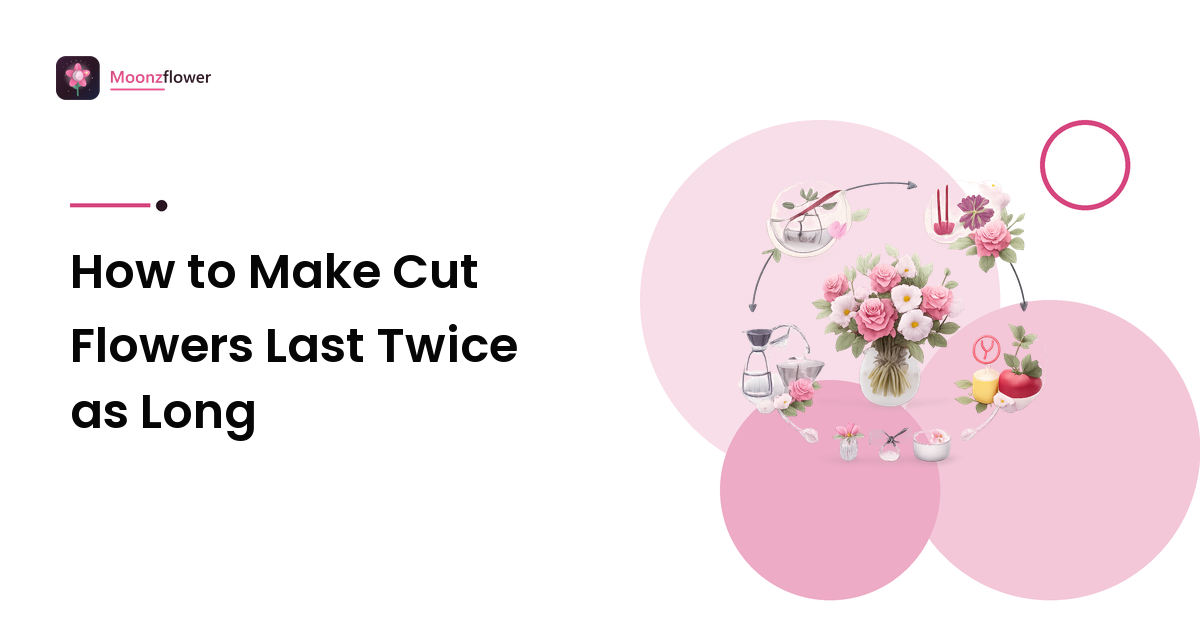
If you want cut flowers to last twice as long, the single highest-value change is temperature, followed closely by water hygiene. Cool, clean, and freshly cut beats every clever vase trick you have read about. A bouquet left on a sunny windowsill in unchanged water is running down every clock at once; the same bouquet in a cool corner with water refreshed every second day is not a different bouquet, it is a different environment.
Doubling is a real outcome, but it is worth being honest about where it comes from. You are not making a flower live longer than its species allows. You are recovering the days that poor handling would otherwise take away — and for most people, that gap is wide enough to look like doubling.
What "twice as long" actually means
A mixed supermarket bouquet given no particular care often looks tired by day three or four. The same stems, handled properly, commonly hold for a week or more. That is the doubling: not a botanical miracle, just the distance between careless and careful.
What you cannot do is override the flower itself. Poppies, sweet peas, and fully open peonies are naturally short-lived because their petals are thin and their energy reserves are small. Alstroemeria, chrysanthemums, and carnations are structurally built to hold on. Good care moves every flower toward the top of its own range; it does not move a poppy into carnation territory.
So the useful question is not "what trick makes flowers last longer" but "what is currently shortening them?" There are only four answers.
The four clocks running on every cut stem
A flower on a plant is fed by roots and leaves. A flower in a vase has lost both, and is living on stored sugars and whatever it can drink through a wound. Four processes work against it.
Blockage: the stem stops drinking
Water moves up a stem through xylem — narrow channels that pull water as a continuous column. Cut a stem in open air and two things can break that column. Air is drawn into the channels, forming a bubble (an embolism) that stops flow the way a kink stops a hose. And many plants seal their own wound: roses and woody stems callus over, while daffodils, euphorbia, and poppies leak a latex-like sap that gums the opening shut.
This is why a re-cut matters so much more than it sounds. You are not tidying the stem, you are reopening the plumbing. Cutting at an angle helps because it increases the exposed surface and stops the stem sitting flat on the vase floor, sealed against the glass.
Bacteria: the water turns against the flowers
Vase water is warm, still, and full of dissolved sugars from the stems themselves. Within a day or two, bacteria and yeasts multiply and form a slippery biofilm on the stem base and vase wall. That film physically plugs the same xylem channels an air bubble would, and the decomposition products damage stem tissue at the waterline.
Cloudy water and a sour smell are the visible stage of a blockage that started earlier.
Energy: the flower runs out of fuel
Petals do not just sit there. They respire, and buds that are still opening are doing expensive work. With no roots and few functional leaves, the flower is spending reserves it cannot replace. This is the gap sugar in flower food fills — but sugar alone feeds bacteria faster than it feeds the bloom, which is why food sachets always pair it with something antibacterial.
Ethylene and heat: the ageing signal
Ethylene is a plant hormone that triggers ripening and petal drop. Ripening fruit gives it off generously, which is why a bowl of bananas next to a vase is a genuine problem. Carnations, sweet peas, delphinium, and snapdragons are particularly sensitive; sunflowers and chrysanthemums shrug it off.
Heat multiplies everything above. As a rule of thumb in plant tissue, respiration roughly doubles for every 10°C rise — so a vase at 26°C is burning through reserves far faster than one at 16°C, while the same warmth accelerates bacterial growth and pushes transpiration past what the stem can drink. Temperature is the lever that moves all four clocks at once, which is exactly why it is the one to pull first.
The first ten minutes decide most of it
Everything you do in the first ten minutes is worth more than anything you do on day four.
- Start with a genuinely clean vase. Warm soapy water, then rinse. A vase that "looks clean" often carries a biofilm from the last bouquet, and that inoculates your fresh water immediately.
- Strip every leaf that would sit below the waterline. Submerged foliage rots within a day and is the largest single bacterial source in most vases. Leave the upper leaves — they still contribute.
- Re-cut 2 to 3 cm off each stem at a sharp angle. Use floral snips or a knife. Household scissors crush the channels closed as they cut, which is the opposite of the goal.
- Cut under water where you can. Doing it in a bowl or under a running tap stops air being pulled into the freshly opened channels.
- Give them a long first drink before arranging. Florists call this conditioning: a couple of hours in deep, cool water lets every stem rehydrate fully before it has to hold a shape. Flowers that arrive dry-packed need this most.
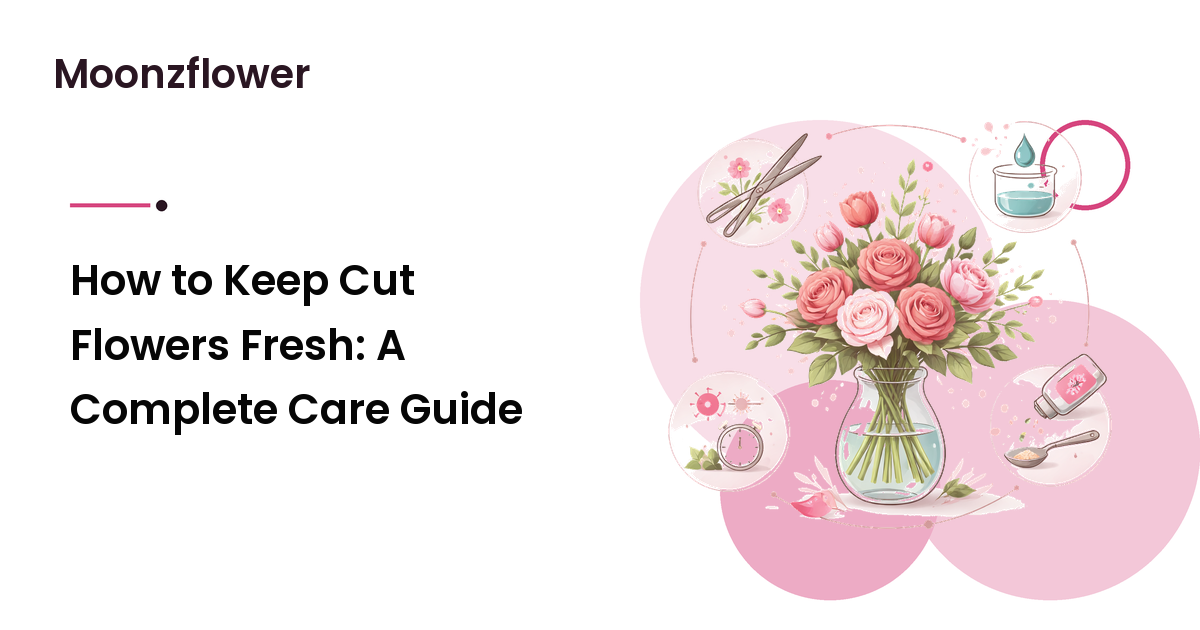
The wider version of this routine — placement, per-flower quirks, and reviving a droopy bouquet — is covered step by step in our complete guide to keeping cut flowers fresh. Treat what follows here as the part that specifically buys you extra days.
The two habits that do most of the doubling
Give them a cool night
Commercial florists keep stock in a cooler for a reason: cold slows respiration, bacterial growth, and ethylene response simultaneously. You do not need refrigeration to benefit. Moving the vase to the coolest room in the house overnight, or away from a radiator, captures a large share of the same effect for zero cost.
If you do use the fridge, keep the flowers away from fruit and vegetables — the same compartment that ripens produce is producing ethylene — and out of the coldest zone, which can damage soft petals. A cool hallway is usually the smarter option.
Where you place the vase during the day follows the same logic: bright but not in direct sun, away from stoves, screens, and heating vents, and out of the draught from an air conditioner or open window. Direct sun is the common mistake: it warms the vase water while petals transpire faster than the stems can resupply.
Change the water properly, not partially
Topping up a vase is not a water change. The bacteria and the biofilm stay, and you have diluted whatever biocide was in the food.
Every second day, do the full version: empty the vase, rinse or wash it, trim about a centimetre off each stem, and refill with fresh cool water and a correctly dosed sachet. The re-trim is the part people skip, and it is the part that reopens stems that have quietly sealed themselves since the last change. Clean water in a vase full of sealed stems achieves very little.
Buying and receiving flowers with longevity in mind
Some of the doubling happens before the flowers reach your kitchen.
- Buy in bud, not in bloom. A rose showing colour with the outer petals just loosening will open in your vase and give you those days. A fully open one has already spent them.
- Check the stem base, not the head. Firm, pale, non-slimy stems indicate flowers that have been kept in clean water. A dark, soft base means the countdown started days ago.
- Look at the foliage. Leaves yellowing at the edges signal age or ethylene exposure even when the petals still look convincing.
- Get them into water fast. Every hour a stem spends dry in a car or hallway is an hour of sealing and air intake you will have to undo with a deeper cut.
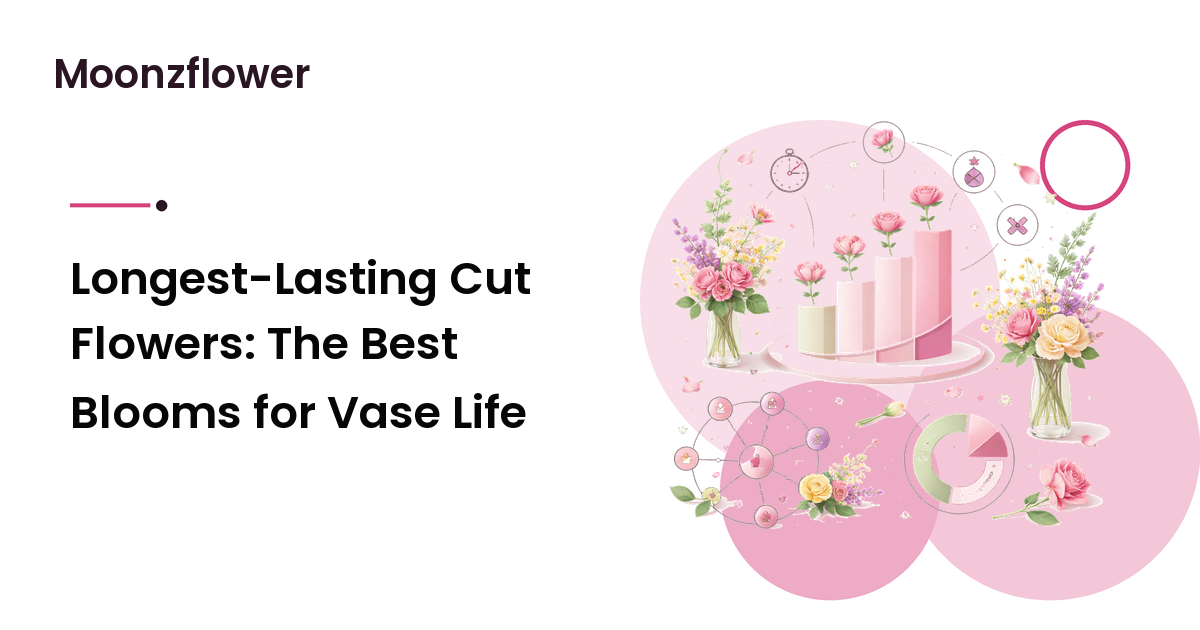
If longevity is the priority for a particular spot in the house, choose accordingly rather than hoping care will compensate. Alstroemeria, chrysanthemums, carnations, lisianthus, and gerberas reward the routine most; delicate ranunculus and poppies are for the pleasure of the week, not the fortnight.
FAQ
How long do cut flowers last with good care?
Most mixed bouquets manage 5 to 7 days, and hardier stems such as alstroemeria and chrysanthemums often reach two weeks. The same flowers left in unchanged water in a warm room may fade in three or four days, which is where the doubling comes from.
What is the fastest way to make flowers last longer if I only do one thing?
Move them somewhere cooler and out of direct sun. Temperature slows respiration, bacterial growth, and ethylene response at the same time, so a single change affects every clock working against the bouquet.
Why do my flowers wilt when the water is still full?
Almost always because the stems cannot drink — sealed cut ends, an air bubble in the channels, or a bacterial film at the base. A full vase proves nothing about uptake. Re-cut 2 to 3 cm under water and refresh the vase.
Does putting flowers in the fridge really extend vase life?
A cool spell overnight helps, and it is the principle behind florist coolers. Keep the flowers away from fruit and vegetables, since ripening produce releases ethylene, and out of the coldest part of the fridge, where soft petals can be damaged.
Do I need flower food if I change the water every day?
Daily changes cover much of what the antibacterial component does, so results stay decent. You lose the sugar and the acidifier, though, so tight buds may open less fully and stems draw water less efficiently.
The short version
Cut flowers do not fade on a fixed schedule. They fade when the stem stops drinking, when the water turns, when the reserves run out, and when heat and ethylene push the ageing signal. Every one of those is at least partly under your control: a sharp angled cut under water, a genuinely clean vase, a full water change with a re-trim every second day, and the coolest sensible spot in the house.
Do those four things consistently and the extra days arrive on their own — no vodka, no pennies, no folklore required.
For more fact-first flower care, along with birth-flower and flower-meaning references, browse the plant care guides on Moonzflower.