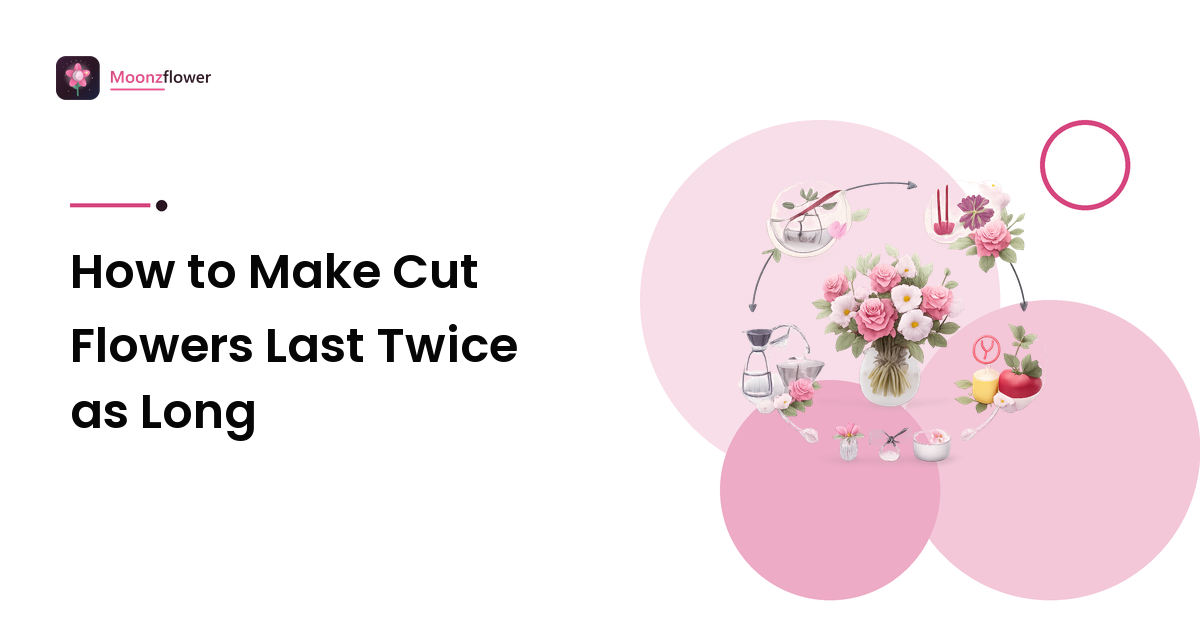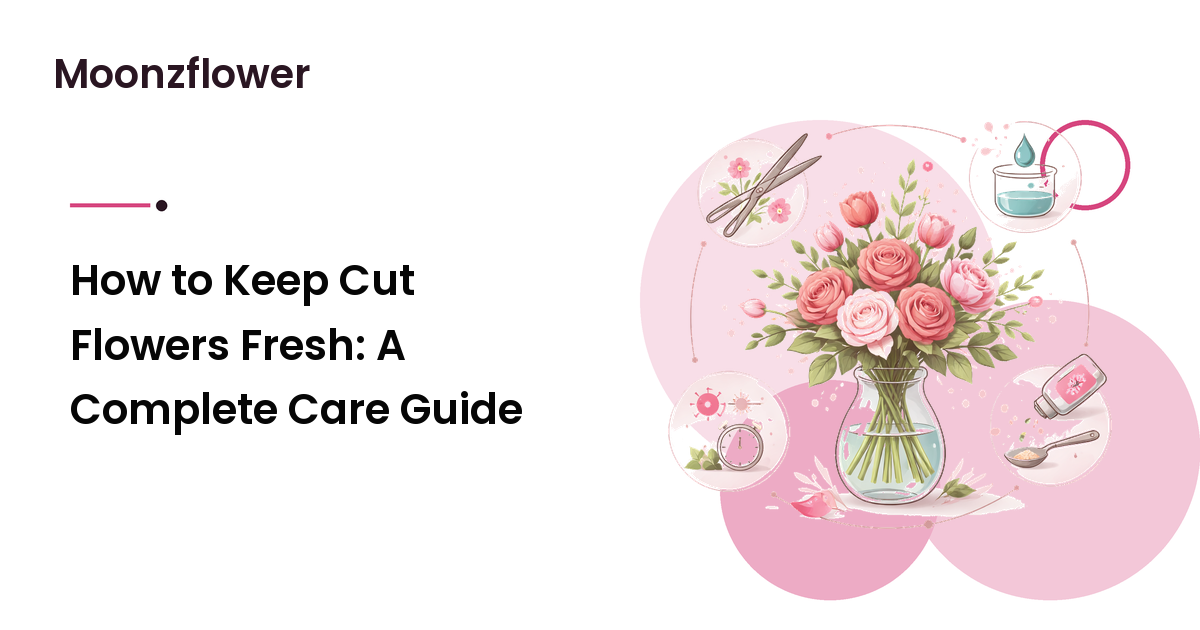
A fresh bouquet can hold its beauty for a week or more, or fade in two or three days. The difference is rarely the flowers themselves. It is the small habits between the moment you bring them home and the moment they finally fade. The good news: keeping cut flowers fresh is mostly about clean water, a sharp cut, and the right spot in the room. None of it requires special equipment, and most of it takes only a few minutes.
This guide walks through the full routine, from the first trim to reviving a droopy stem, so your next bouquet earns every day it can.
Why Cut Flowers Fade
Once a flower is cut, it loses its supply line. It can no longer pull water and sugar up from roots, so it lives on what it can draw through the cut stem. Three things shorten that window:
- Blocked stems. Air bubbles and dried sap seal the cut, so the stem cannot drink.
- Bacteria. Cloudy water grows microbes that clog the stem and rot the base.
- Stress. Heat, direct sun, and drafts make flowers transpire faster than they can drink.
Almost every care tip below is just a way to fight one of those three. Keep the stem open, keep the water clean, and keep the flowers calm.
The First Hour: Setting Up for a Long Vase Life
What you do when flowers first arrive matters more than anything you do later.
Trim the stems at an angle
Use a sharp knife or floral snips, not household scissors, which can crush the stem. Cut at least 2 to 3 centimeters off the bottom at a 45-degree angle. The angle increases the drinking surface and stops the stem from sitting flat against the vase bottom where it cannot take up water.
Trim under running water or in a bowl of water if you can. Cutting while the stem is wet helps prevent an air bubble from sealing the channel.
Strip the lower leaves
Remove any leaves that would sit below the waterline. Submerged foliage rots quickly and is the single biggest source of bacteria in a vase. Leave the upper leaves alone; they help the arrangement look full.
Start with a clean vase
Wash the vase with warm soapy water before filling it, even if it looks clean. A thin film of old residue is enough to seed bacteria in fresh water.
Water and Flower Food
Flowers drink more than people expect, so the water itself is your main tool.
Use the right water
Fill the vase about two-thirds with cool water for most flowers. Bulb flowers such as tulips and daffodils prefer cooler water, while tropical stems like a little warmth. Room-temperature water is a safe default if you are unsure.
Add flower food, and use it correctly
The little sachet that comes with a bouquet is not a gimmick. It contains three useful ingredients: sugar to feed the bloom, an acidifier to help water move up the stem, and a mild antibacterial agent to keep the water clean. Follow the dose on the packet, because too much can do more harm than the bloom can handle.
No sachet on hand? A common home substitute is a teaspoon of sugar plus a few drops of household bleach per liter of water. The sugar feeds, the bleach controls bacteria. Skip the old soda-and-aspirin folklore; it is unreliable and often makes the water dirtier.
Change the water regularly
Refresh the water every two days, or sooner if it turns cloudy. Each time, rinse the vase, re-trim about a centimeter off the stems, and add fresh food. This single habit does more for vase life than any other trick.
Placement: Where You Put the Vase
Flowers last longest somewhere cool, bright, and still.
- Keep them out of direct sun. Sunlight speeds aging and overheats the water.
- Avoid heat sources. Radiators, stoves, and the top of a fridge all shorten vase life.
- Mind the drafts. Air-conditioning vents and open windows dry petals out.
- Separate from the fruit bowl. Ripening fruit releases ethylene gas, which makes many flowers wilt early.
A bright hallway or a side table away from the window is often better than a sunny sill.
Care Tips for Common Flowers
Not every bloom wants the same thing. A few worth knowing:
- Roses like a deep drink and benefit from re-trimming. If a head droops, recut the stem and submerge the whole stem in cool water for an hour.
- Tulips keep growing in the vase and bend toward light. Use a taller vase and turn it daily for an even shape.
- Hydrangeas drink through their petals as well as their stems; a light misting helps them recover from wilting.
- Lilies last well, but pinch off the orange pollen anthers to avoid staining petals and surfaces.
- Daffodils release a sap that harms other flowers, so give them their own vase for the first day before mixing.
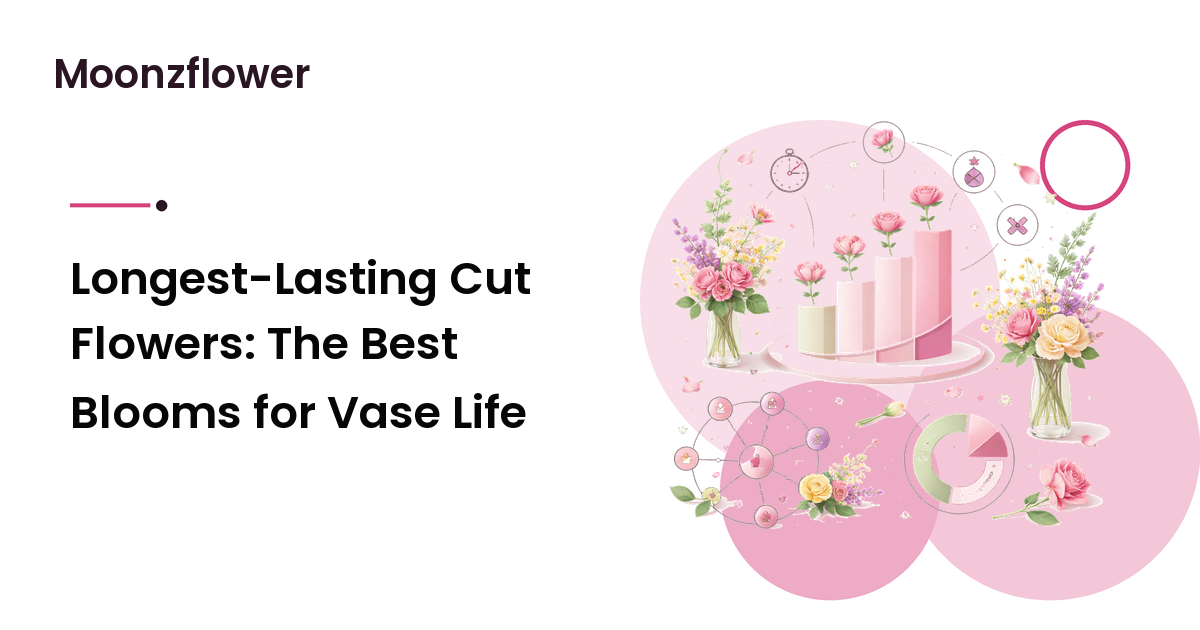
When you choose flowers for longevity, alstroemeria, chrysanthemums, and carnations are dependable performers that often outlast the showier stems beside them.
How to Revive Wilting Flowers
A drooping bouquet is not always finished. Try this before giving up:
- Recut the stems by 2 to 3 centimeters at an angle under water.
- Refresh the vase with clean, cool water and new flower food.
- Give roses and hydrangeas a soak. Lay the whole stem and head in a sink of cool water for 30 to 60 minutes.
- Move them somewhere cool for a few hours, even the fridge overnight, to slow aging.
Stems that have gone soft and slimy at the base are past saving, but firm stems with thirsty heads often perk back up within a few hours.
FAQ
How long should cut flowers last?
Most mixed bouquets last 5 to 7 days with good care, and hardy stems can reach two weeks. Soft-petaled flowers like poppies are naturally shorter-lived no matter what you do.
Does adding sugar really help flowers last longer?
Sugar feeds the bloom, but on its own it also feeds bacteria. It only helps when paired with something that controls microbes, which is why proper flower food includes both.
Should I refrigerate my flowers?
A cool spot overnight can extend vase life, which is how florists store stock. Keep them away from fruit and from the coldest part of the fridge, which can damage delicate petals.
Why do my flowers wilt after only two days?
The usual causes are dirty water, stems that sealed before they could drink, or a warm, sunny spot. Recut the stems, give them clean water with food, and move them somewhere cooler.
Is tap water bad for flowers?
Tap water is fine for most flowers. If your water is very hard or heavily chlorinated, letting it sit for an hour before use or using filtered water can help sensitive stems.
Keep Your Next Bouquet Beautiful for Longer
Fresh flowers reward a little attention: a clean vase, a sharp angled cut, the right food, and a cool spot away from sun and fruit. Build those few habits and you will notice the difference within the first week.
When you start with farm-fresh, carefully handled stems, this routine has even more to work with. Order a bouquet from Moonzflower, follow the steps above, and enjoy flowers that look their best for days longer.