The dream of a garden that looks lush without eating your weekends is real — but it isn't made by planting less. It's made by deciding which parts of the yard should be living and which should be hard surface, then letting each do the job it's best at.
Here's the takeaway up front: a low-maintenance garden is a balance of three layers — artificial turf where you'd otherwise fight a lawn, paver borders and paths that hold everything in place, and a small, well-chosen band of living plants for the color and scent no synthetic surface can fake. Spend your effort on that last layer; the first two look tidy year-round on their own.
The Low-Maintenance Formula: Less Lawn, Sharper Edges, Better Plants
Most yard maintenance is lawn maintenance — mowing, watering, feeding, edging, patching. So the biggest lever isn't which flowers you plant; it's how much thirsty turfgrass you keep. Convert the parts you only look at — not walk or play on — into turf or paving, and you free up water, time, and attention for the plants that reward it.
Where Artificial Turf Earns Its Place
Artificial turf is not a whole-yard answer — treating it like one is how gardens end up looking like putting greens. Used with judgment, it solves the problems a living lawn creates in an easy-care design:
- Shade and high-traffic runs. Grass goes patchy under trees and wears to mud on paths and pet areas; turf stays even and green where a lawn can't.
- Water discipline. In dry-summer climates, a synthetic lawn removes the largest single water draw in the yard — often the whole point of the redesign.
- The "always tidy" frame. A clean green plane makes the surrounding plants read as intentional, the way a mat frames a print.
The trade-off is honest: turf gives you no seasonal change, scent, or habitat. That's why it belongs around the planting, not instead of it — the quiet, reliable green, with living plants supplying the life.
Why Paver Borders Tie the Whole Thing Together
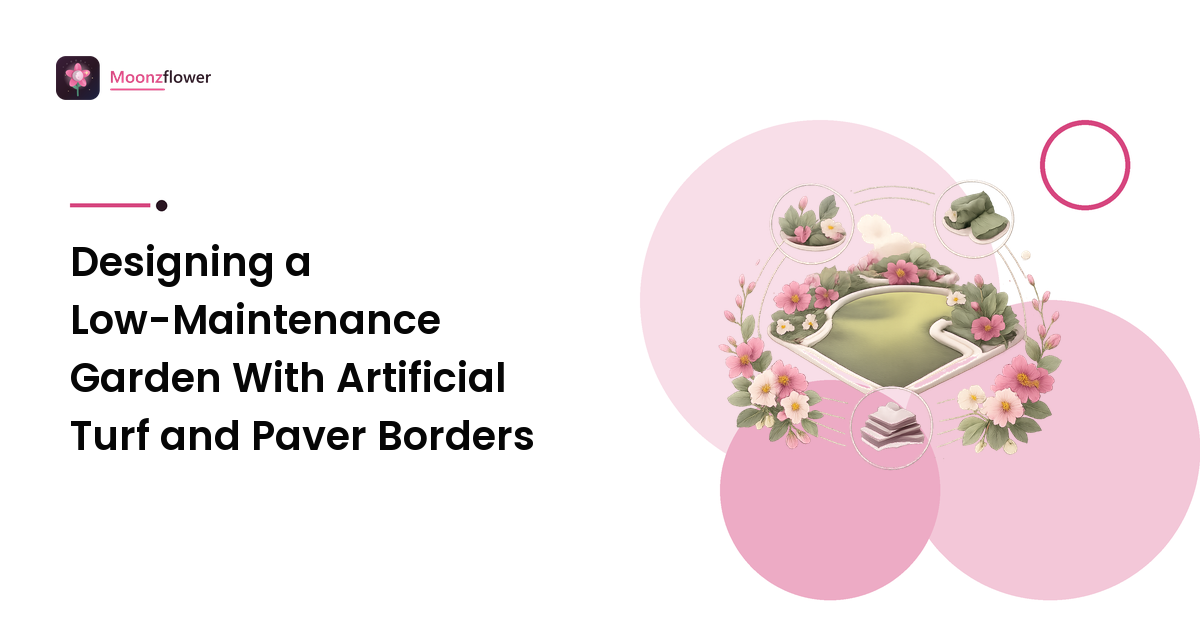
The join between turf, planting beds, and paths is where low-maintenance gardens are won or lost. Left as a raw edge, turf frays and soil washes onto the lawn after every rain. A paver border is the seam that holds all three together: it gives the turf a firm edge to be cut and secured against, contains soil and mulch in the beds, and creates a mowing- and edging-free transition — nothing to trim where a paved strip meets synthetic grass. A soldier course around each bed, a path threading between them, and a small patio for a table is the skeleton the plants hang on. Interlocking pavers suit an evolving garden especially well: they flex with ground movement instead of cracking like a poured slab, and a single unit can be lifted and reset if a root heaves it or you re-route a bed.
Choosing Plants That Pull Their Weight
With turf and pavers handling the structural work, your planting can be small. The rule: right plant, right place, grouped by need. A plant matched to its spot and its neighbors' watering rhythm nearly cares for itself; the same plant fighting the wrong light or too little water becomes a chore. (It's the same logic behind why a healthy plant sometimes grows leaves but won't bloom — conditions, not effort, decide the outcome.) Group plants by water need, and lean on these:
- Structural evergreens and ornamental grasses for shape that holds all year with almost no input.
- Drought-tolerant perennials — lavender, salvia, yarrow, coneflower, sedum — for waves of bloom on little water, plus scent and pollinators the turf can't offer.
- A few potted focal plants on the paver patio, so you can move color where you need it and swap plants seasonally without digging.
Keep a tight palette, too: two or three repeating colors against the neutral backdrop read as designed; a dozen scattered ones read as busy. A living border wrapping a quiet green plane still reads as a garden, not a parking lot with a hedge.
Getting the Install Right
Plants you can put in yourself over a weekend. The hardscape is less forgiving: paver borders and paths need proper excavation, a compacted base, and correct slope so water drains away from beds and the house, and turf needs a base built for drainage or it puddles after rain. Done poorly, both settle and pool — the opposite of low-maintenance.
If you're in the Bay Area — around Livermore and the Tri-Valley especially, where dry summers make water-wise turf and durable pavers a natural fit — it's worth having a local hardscape specialist scope the base, drainage, and edge details before you break ground. A regional company like Pavers and Turf by O'Neill's works specifically with interlocking pavers, artificial turf, patios, and walkways in these conditions — exactly the combination this garden depends on. Treat it as one option to evaluate: settle the layout and plant plan first, then bring in a pro for the parts that have to be built right once.
FAQ
Is an artificial-turf-and-paver garden really low-maintenance, or just no-maintenance?
Low-maintenance, not zero. Turf needs an occasional rinse and brush; pavers an occasional sweep and the odd re-set; and the planting layer still wants seasonal care. What you eliminate is the constant burden of mowing, edging, and watering a full lawn.
Won't a design like this look artificial or cold?
Only if you skip the plants — the failure mode is paving or turfing the entire yard. Keep a generous band of living planting framed by the turf and pavers, and the hard surfaces read as a clean setting for the garden, not a replacement for it.
What plants work best against pavers and turf?
Drought-tolerant perennials and ornamental grasses that hold shape with little water — lavender, salvia, yarrow, sedum, coneflower — plus a few potted focal plants you can move and swap. Group them by water need, and repeat two or three colors for a cohesive look.
Start With the Plan, Then Build the Base Right
A low-maintenance garden isn't a barer one — it's a better-balanced one. Shrink the thirsty lawn, let artificial turf and paver borders carry the structural work, and pour your effort into a small, deliberate planting that brings the color and seasonal change no surface can fake.
When you reach the parts that have to be built right the first time — the paver base, the drainage, the turf sub-base — bring in a local specialist. If you're gardening around Livermore or the wider Bay Area, get a hardscape plan from Pavers and Turf by O'Neill's so the foundation matches the easy-care garden you're picturing.