A bouquet gives you a week of colour, maybe two with good care. A blooming houseplant can give you months — and the right one, chosen for the light you actually have, can flower again every year for a decade. That's the promise that sells so many potted orchids and cheerful little pots of colour. It's also where the disappointment starts, because the shelf they all sit on hides a crucial difference between them.
Here's the heart of it: blooming houseplants come in two kinds — plants grown to deliver one long, spectacular show, and plants that will rebloom for years — and the shop rarely tells you which is which. Neither kind is a bad buy. But they're different purchases, the way a bouquet and a rose bush are different purchases, and knowing which one you're holding changes everything about what happens after the flowers fade.
One Long Show, or Flowers Every Year?
Walk down any supermarket plant aisle and both kinds sit side by side at similar prices.
The one-show plants are grown, greenhouse-perfect, to be at peak bloom when you buy them. Florist chrysanthemums, most pre-forced bulb pots, and many of the small gift plants wrapped in foil belong here. They'll flower generously for weeks, and when they finish, coaxing a meaningful second act out of them indoors ranges from difficult to practically impossible. Think of them as a very long-lasting bouquet with leaves — enjoy them completely, then let them go without guilt.
The rebloomers are the plants that earn a permanent spot: moth orchids, African violets, peace lilies, anthuriums, holiday cacti, kalanchoes, and their relatives. Given the right light and a little seasonal rhythm, these flower again and again — some almost continuously, others in a reliable yearly season.
How to tell at the shop: one-show plants are usually sold in full, maximal bloom with every stem flowering at once, often in small pots and festive wrapping. Rebloomers tend to show buds still to open — a plant with unopened buds has a future, and a shop that talks about the plant's care rather than just its colour is usually selling you the second kind. When in doubt, ask "will this flower again next year indoors?" — a florist worth their apron will answer honestly.
Match the Plant to Your Light, Not Your Taste
Once you want a rebloomer, the deciding question isn't which flower you love most — it's what light you can offer. Flowering is expensive for a plant, and light is the income that pays for it. Foliage tolerates a dim corner; flowers don't.
- A bright windowsill with some direct sun opens the whole catalogue: kalanchoes, hibiscus, and most of the sun-lovers will bloom happily.
- Bright but indirect light — near an east or west window, or filtered south light — is the sweet spot for the classics: moth orchids, African violets, anthuriums, and begonias.
- A genuinely modest spot, light but never bright, narrows the field to the tolerant few. A peace lily is the honest recommendation here — it flowers less lavishly in low light, but it flowers.
Buying the plant for the spot, rather than finding a spot for the plant, prevents the most common failure in this whole category: a healthy, leafy plant that never blooms again because it's living on a light budget that covers leaves and nothing more.
The Part Beginners Miss: Blooming Plants Keep a Calendar
Most rebloomers don't flower continuously, and a pause is not a problem to fix. Flowering runs in cycles — a season of show, then a quieter stretch where the plant rebuilds its reserves. Many of the best-loved bloomers actually need a cue to start the next cycle: a stretch of cooler nights for an orchid, longer autumn nights for a holiday cactus, a dry dormant rest for a bulb. Keep them in constant summer — warm, watered, and fed year-round — and they may simply never get the signal.
So work with the calendar rather than against it. Let the plant rest when it finishes, ease off water and feed, and give the species the seasonal cue it evolved to expect. If a plant has been leafy, healthy, and flowerless for a year or more, something specific is usually missing — light, rest, feed, or simply maturity — and why your flowering houseplant won't bloom walks through the diagnosis one lever at a time.
Bulbs: The Scheduled Kind of Indoor Flower
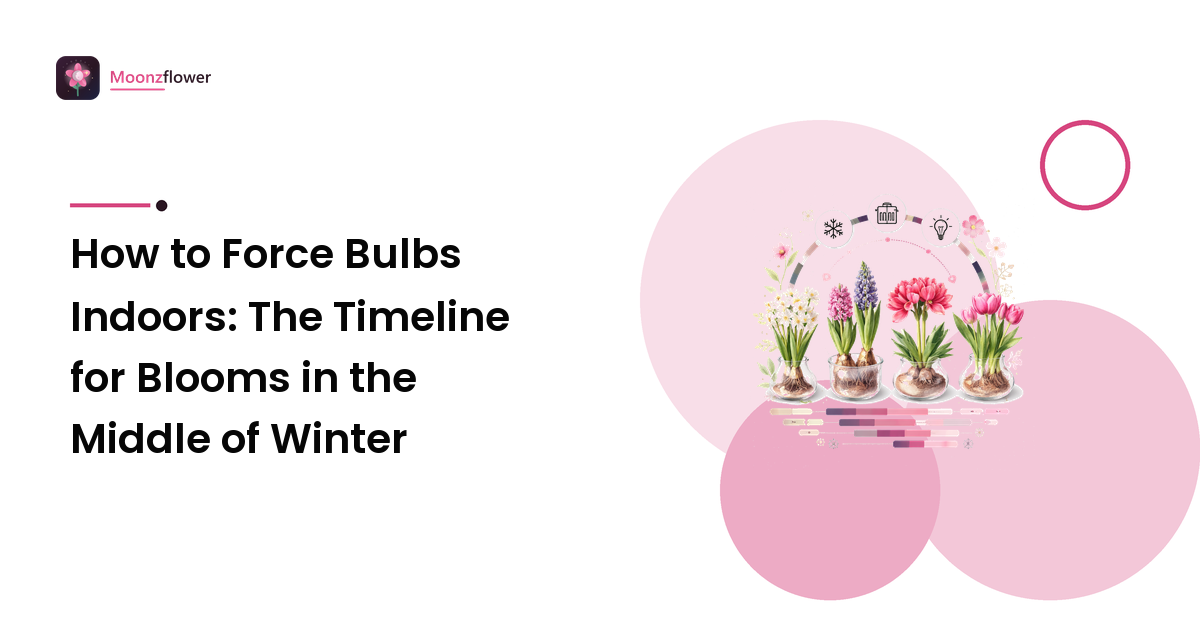
Bulbs are the one corner of this territory where you control the calendar. An amaryllis or a pot of paperwhites is essentially a flower on a timer — plant, wait, bloom — which makes bulbs the most beginner-proof route to indoor flowers and the only reliable way to have something blooming in the darkest weeks of winter. Some, like amaryllis, can be rested and rebloomed for years; others are honest one-show plants. The full winter timeline — what to start when, and how cold treatment works — is in how to force bulbs indoors.
Giving a Plant Instead of a Bouquet
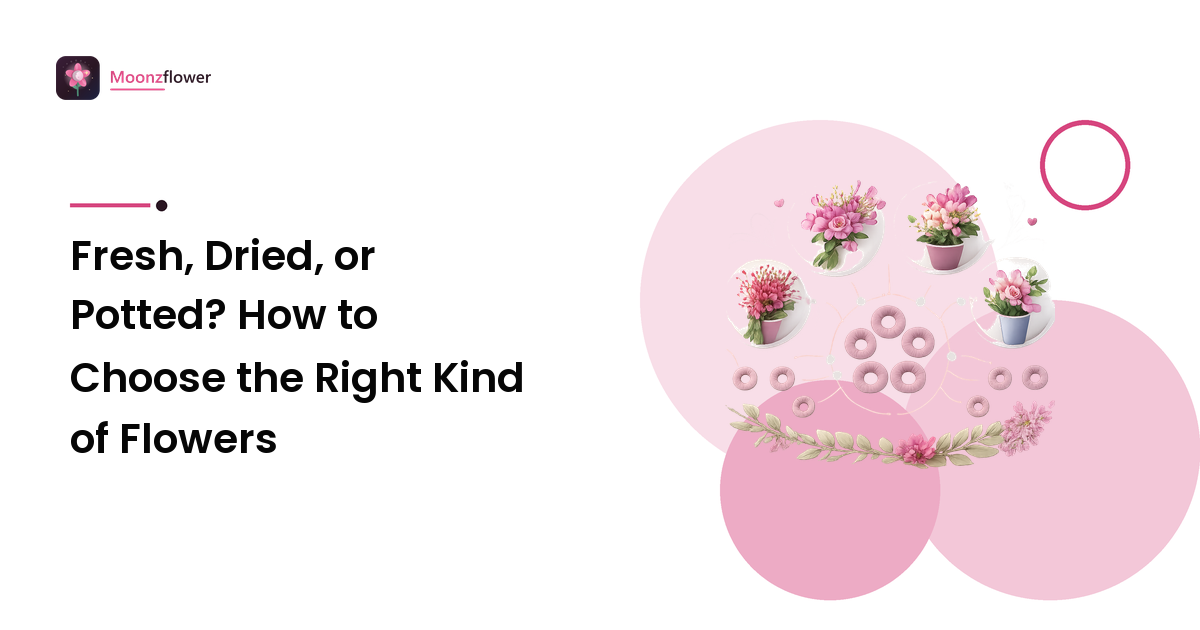
A blooming plant is a lovely gift precisely because it outlasts the occasion — but that duration is also a small responsibility you're handing over. Two questions keep the gift kind: does the recipient have decent light, and will they enjoy a little care, or would they honestly prefer something that asks nothing? For a busy or travel-heavy recipient, a one-show plant or a classic bouquet is the more generous choice, not the lesser one. The broader decision — cut stems, dried, or potted, and for which occasion — is laid out in fresh, dried, or potted, and the etiquette side of sending any of them well is in our flower gifting guide.
Care That Keeps the Colour Coming
The day-to-day of a blooming plant is mercifully short, and it rhymes with good vase care — steady water, nothing extreme, and a little hygiene:
- Water when the pot asks, not on a schedule. Check the top of the compost; water thoroughly when it's dry, and never let the pot stand in a saucer of water. Soggy roots end more houseplants than drought does.
- Drainage is non-negotiable. If the decorative pot has no holes, keep the plant in its plastic nursery pot inside it, and empty the outer pot after watering.
- Deadhead as flowers fade. Removing spent blooms keeps the display tidy and redirects energy toward the next buds instead of seed.
- Feed lightly, and only in the growing season. A bloom-type feed at label strength; nothing at all while the plant rests.
- Once buds form, stop moving the plant. Buds are the plant's commitment, and sudden changes in light or temperature can make it drop them.
If you love cut flowers too, the same instincts — clean water, fresh cuts, no extremes — are exactly what stretches a bouquet, and how to keep cut flowers fresh turns them into a routine.
FAQ
Which blooming houseplants are best for beginners?
Peace lily, kalanchoe, and moth orchid are the forgiving three: peace lily for modest light, kalanchoe for a sunny sill, and moth orchid for bright indirect light — its flowers last for months, and it forgives most beginner mistakes except overwatering. Pick by your light first, favourite flower second.
Do any houseplants really flower all year round?
A few come close — anthuriums and African violets can flower in repeated waves with steady bright, indirect light. Most bloomers, though, flower in seasons with rests between, and that's healthy. Expect rhythm rather than a permanent display, and use a winter bulb to cover the quiet stretch.
Is it worth keeping a gift plant after it finishes flowering?
Check which kind it is first. Moth orchids, anthuriums, and holiday cacti are genuine rebloomers and well worth keeping. Florist mums and most pre-forced bulb pots were grown for one show — compost them without guilt when they finish, as you would a bouquet.
Why did my plant drop its buds before they opened?
Sudden change, almost always. A move to a new spot, a cold draught, a heat source, or a swing in watering while buds were forming will make many bloomers cut their losses and drop them. Once buds appear, keep light, warmth, and watering as steady as you can.
The Next Step
Decide which purchase you're making — one glorious show, or a plant with a future — then let your light choose the species. A rebloomer in the right window, allowed its seasonal rest, will pay you back in flowers for years. Ready to pick one? Browse the blooming plants at Moonzflower and choose one matched to the light you actually have at home.