Choose by lifespan and care, not by looks. Fresh flowers give the strongest scent and impact for one to two weeks. Dried arrangements last months with no water. Potted plants keep growing for years but need light and attention. Faux stems last indefinitely but never smell or change. Match the format to the room and the recipient.
That is the whole decision in five sentences, and most people never make it consciously — they default to a fresh bouquet because that is what a flower gift looks like. Sometimes the bouquet is right. Often a dried bundle in a hallway or a potted plant on an office desk does the job better, for longer, and for less money over the year.
What Are You Actually Choosing Between?
Four formats, four different promises.
Fresh cut flowers are stems sold at or near their peak, alive but disconnected from their roots. Peak beauty, peak scent, shortest window.
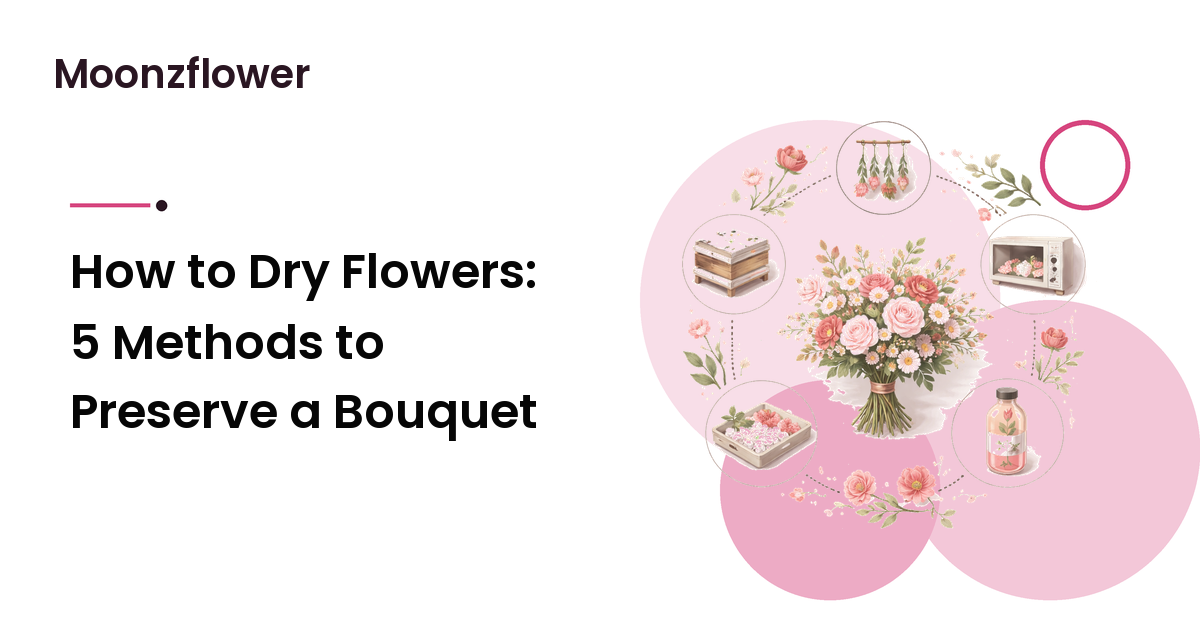
Dried and preserved flowers are the same stems with the water removed by air-drying, pressing, silica gel, or a glycerin soak. You lose scent, flexibility, and some color saturation; you gain months of display with no upkeep.
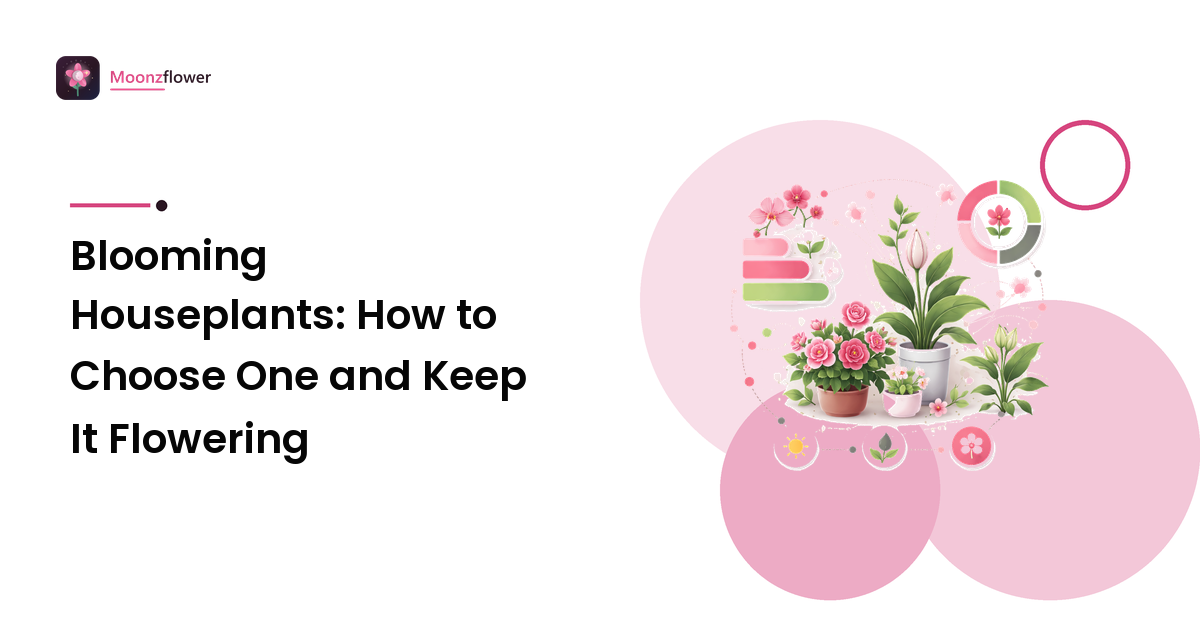
Potted flowering plants — orchids, kalanchoe, cyclamen, azaleas, spring bulbs — are whole living plants sold in bloom. They can rebloom season after season, but they come with obligations: light, water, and eventually a rest period.
Faux stems are fabric, latex, or silk, and nothing about them is botanical. Their honest use is where nothing living survives — a windowless bathroom, a high shelf you cannot reach with a watering can.
The formats are not competing for the same job. They are competing for your particular situation.
How Long Does Each One Actually Last?
This is where expectations usually break. A fresh bouquet does not last a month, and a dried one does not last forever.
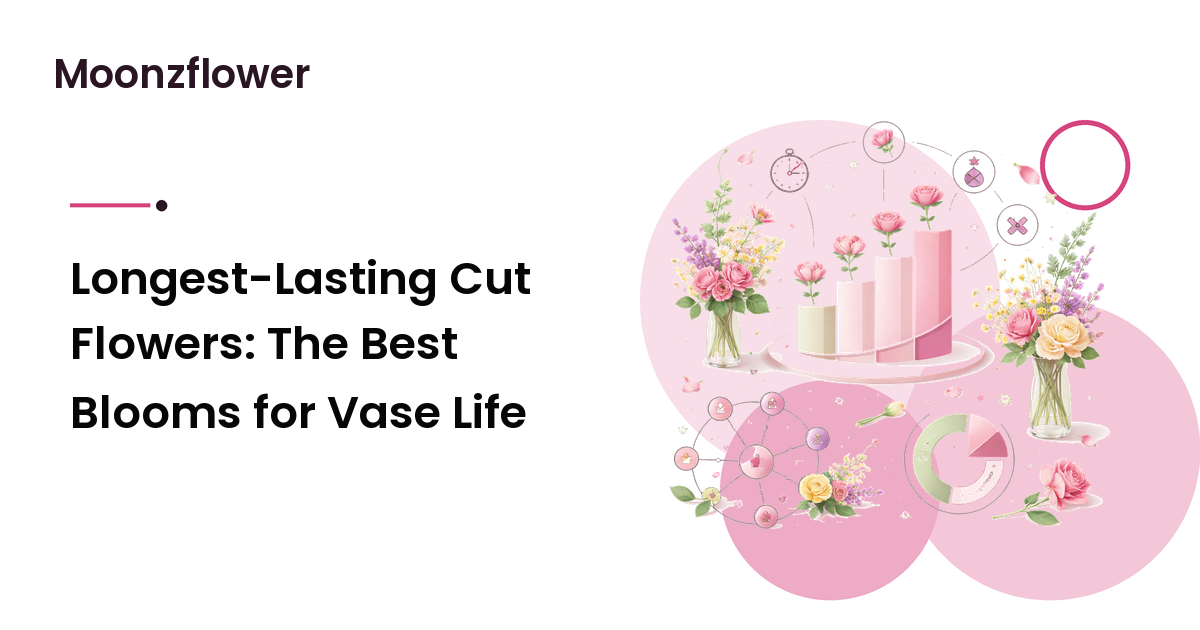
Fresh flowers typically run five to fourteen days, with enormous variation by species. Chrysanthemums and carnations routinely hold two to three weeks; tulips and peonies may give you four or five days. If longevity is the point, the choice of stem matters more than anything you do at home — see which cut flowers last longest in a vase before you buy, then follow a basic care routine to reach the ceiling that stem allows.
Dried flowers hold well for several months to a couple of years. They do not rot, but they do fade in direct sun and grow brittle and dusty over time. Treat them as seasonal decor you refresh, not heirlooms. If you already have a bouquet worth keeping, drying it yourself at peak is far better than buying dried stems that are already months old.
Potted plants are open-ended, which is both the appeal and the catch. An orchid can rebloom for a decade. It can also sit leafy and flowerless for two years if its light and rest cues are wrong — a common and fixable problem, but one that requires the recipient to diagnose why it stopped blooming.
Faux stems last as long as you tolerate them, which in practice means until the fabric fades or the dust wins.
Which Format Suits Which Situation?
Use the table below as a decision grid. Read across the row that matches your hardest constraint — the one you cannot negotiate — and pick the format that scores best on it.
| Criterion | Fresh cut | Dried / preserved | Potted plant | Faux |
|---|---|---|---|---|
| Typical display life | 5–14 days | 3–24 months | Years (with care) | Indefinite |
| Care required | Daily-ish: water, trim | None | Ongoing: light, water, feed | Dusting |
| Scent | Strong (species-dependent) | Faint to none | Mild to strong | None |
| Visual impact | Highest | Muted, textural | Moderate, changes over time | Static |
| Cost over a year | Highest (repeat purchase) | Low per month | Low after purchase | Lowest long-term |
| Best for | Occasions, gestures, events | Low-light rooms, mantels, year-round decor | Desks, gifts for plant people, long-term presence | Unreachable or dark spots only |
| Weakest at | Longevity, travel | Scent, humid rooms | Instant impact, low-light homes | Authenticity, scent |
| Pet-safe? | Depends entirely on species | Usually low risk, but species still matters | Depends entirely on species | Choking/ingestion risk only |
Two rows deserve extra weight. Care required is the row people underestimate: a potted azalea given to someone who travels constantly is a slow-motion failure. Cost over a year is the row that changes minds: a weekly fresh bouquet is a subscription, not a purchase, and framing it that way often shifts the answer toward dried or potted for everyday rooms while reserving fresh stems for the moments that deserve them.
What About Pets and Small Children?
This one is not a preference — it is a safety filter that should run before any of the criteria above.
True lilies (Lilium) and daylilies (Hemerocallis) are severely toxic to cats — pollen, petals, leaves, and even vase water can cause acute kidney injury, and most veterinary guidance is simply to keep them out of any home with a cat. Tulips and hyacinths concentrate irritants in their bulbs, which makes potted bulb gifts a concern in homes with dogs that dig. Oleander and foxglove are seriously toxic to people and pets alike.
Dried flowers reduce the mess but not the chemistry — a dried lily is still a lily. Faux stems remove plant toxicity but introduce a choking and obstruction hazard with small pieces, wire stems, and plastic berries.
The practical rule: check the species, not the format. If you are sending flowers into a home you do not know well, ask about pets, or default to genuinely low-risk choices such as roses, sunflowers, snapdragons, orchids, or freesia. When in doubt, a vet or poison-control service is the right call, not a blog.
How Should the Occasion Change the Answer?
Format carries meaning, whether or not you intend it.
Sympathy and condolence favor fresh flowers. The transience is part of the message, and a dried arrangement can read as an odd thing to hand someone in grief. A living plant works well as a longer-term gesture sent later.
Romance and celebration favor fresh, for the same reason: scent and immediacy are the whole point.
Thanks, congratulations, and workplace gifts often favor potted plants. A desk plant outlives the moment and needs no vase, which matters in an office with no kitchen access.
Home decor and seasonal styling favor dried. A dried bundle on a mantel or in a dim hallway does what fresh stems cannot — hold a look for a season without a water change.
Getting the format right is really the same discipline as getting the delivery timing and the message right, which is the part of sending flowers well that most often quietly goes wrong.
Can You Mix Formats?
Yes, and it is often the best answer. A vase of fresh focal blooms with dried grasses, statice, or preserved eucalyptus as the structural filler gives you fresh impact on a frame that survives the bouquet. When the fresh stems fade, pull them out and the dried skeleton still holds the arrangement together. It stretches the display life, lowers the effective cost, and gives an arrangement more texture than either format achieves alone.
The one mix to avoid: dried stems sitting in water. They will rehydrate, soften, and mold. Keep them dry-footed alongside a separate water-holding vessel, or use a tall vase where only the fresh stems reach the water line.
FAQ
Are dried flowers a cheap substitute for fresh?
No — they are a different product with a different job. Good dried and preserved stems are often priced close to fresh because the drying and preserving takes time and loss. What you buy is months of display without upkeep, not a discount bouquet.
Do dried flowers trigger allergies?
They can collect dust, which bothers dust-sensitive people, and some retain a little pollen. Rinsing is not an option, so a gentle shake or a hairdryer on cool from a distance is the usual maintenance. People with strong pollen allergies often do better with faux or with low-pollen fresh choices.
Is a potted plant a better gift than a bouquet?
Better for people who enjoy plant care and have decent light. Worse for people who travel, work long hours, or live in a dim flat, where it becomes a quiet obligation. Match the gift to the recipient's habits, not to what lasts longer on paper.
How do I stop dried flowers fading so fast?
Keep them out of direct sunlight, which is the main culprit, and away from steamy rooms like bathrooms and kitchens where humidity softens them. A spot with indirect light and steady air will roughly double how long they hold their color.
Which format is best for a wedding or event?
Usually a mix. Fresh for anything guests will be close to — bouquets, table centres, buttonholes — because scent and freshness read at close range. Dried and preserved for large installations, backdrops, and anything built days in advance, since it can be assembled early and does not need water.
Choose the Constraint First
The format decision gets easy once you name the constraint you cannot move. If the constraint is a moment, buy fresh. If it is a dark hallway or a busy household, buy dried. If it is someone who genuinely likes tending things, buy potted. If it is a spot where nothing living survives, faux is honest rather than a compromise. And if the constraint is a cat in the house, the species question outranks all of it.
Before you commit, it is worth knowing what the flower itself is understood to say. Look up a flower's meaning and symbolism on Moonzflower and let the bloom, not just the format, carry the message.