Almost any flower can be bought almost any time of year now, flown in from a farm on the other side of the world. That convenience hides a quieter truth: a flower bought in its own season is usually cheaper, fresher, and longer-lasting than the same flower forced or shipped out of season. Buying with the calendar instead of against it is the single easiest way to get better flowers for less money, and it works whether you are sending a birthday bouquet or planning a wedding for two hundred guests.
Here is the takeaway up front: let the season pick the flower, then choose the color and shape you want from what is at its peak. A florist can source anything, but the stems that are in season that week are the ones that arrived days ago rather than a week ago, cost the least to buy, and hold up longest in the vase. Fight the calendar and you pay a premium for flowers that are already partway through their life.
Why In-Season Flowers Are the Smart Buy
The case for seasonal flowers is not sentimental. It is practical, and it comes down to three things.
- Freshness and vase life. In-season stems are grown closer to when you buy them, so they spend less time in cold storage and transit. A flower that reaches you three days after cutting simply has more days left to give than the same flower cut ten days ago and shipped across an ocean.
- Price. Abundant supply drives cost down. When a flower is at the height of its natural harvest, growers have plenty, and the wholesale price drops. Out of season, the same flower is scarce, forced under glass, or air-freighted, and every one of those things adds to the tag.
- Quality per dollar. Because seasonal blooms cost less, the same budget buys more of them, or buys the better grade. A generous armful of in-season stems almost always reads as more luxurious than a sparse handful of out-of-season ones.
None of this means never buying an out-of-season favorite. It means knowing when you are paying a premium and deciding that it is worth it, rather than paying it by accident.
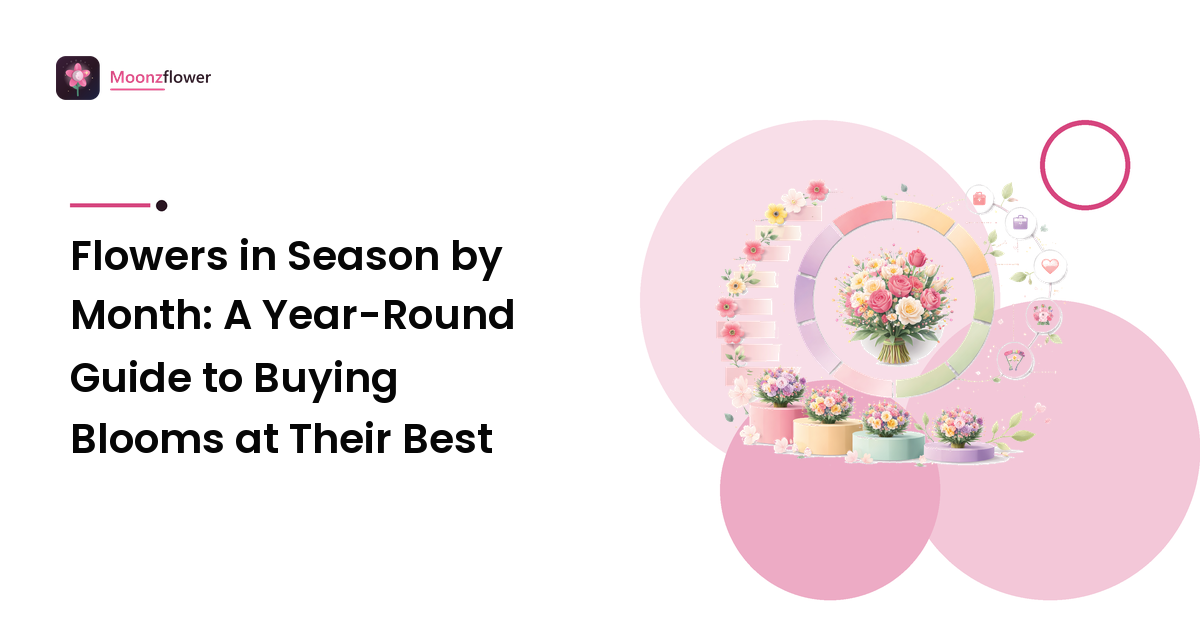
Flowers in Season, Season by Season
Growing seasons shift with your climate and hemisphere, so treat this as a temperate-climate map rather than a fixed rule. The dates below reflect the Northern Hemisphere; if you are south of the equator, slide everything six months. Your local florist is always the final authority on what is genuinely peaking this week.
Spring (roughly March to May)
Spring is the most abundant and celebrated flower season, and prices reflect the sheer supply. It is the season of bulbs and blossom.
- Tulips in every color, at their best value of the year.
- Daffodils and narcissus, the first bright signal that the season has turned.
- Ranunculus and anemones, layered and jewel-toned, beloved by florists for their painterly look.
- Peonies, the headline act of late spring, lush and short-lived and worth the wait.
- Lilac, hyacinth, and sweet pea for scent, plus flowering branches like cherry and quince.
Spring flowers tend to be soft-stemmed and thirsty, so they reward good care. A cool room and clean water make a real difference to how long they hold.
Summer (roughly June to August)
Summer is peak garden season, with the widest range of colors and the strongest scents of the year. It is also the classic wedding season, which keeps demand and prices high for the most popular stems.
- Garden roses and spray roses, at their most fragrant.
- Dahlias, from dinner-plate giants to small pompoms, in extraordinary color range.
- Sunflowers, zinnias, and cosmos for warmth and cheer.
- Sweet peas, larkspur, and delphinium for height and cottage-garden softness.
- Hydrangea, generous and full, ideal for making an arrangement look abundant fast.
Autumn (roughly September to November)
Autumn brings a shift to warmer, deeper tones and sturdier, longer-lasting textures. Many of these are excellent value and hold up beautifully.
- Chrysanthemums in their full range, one of the longest-lasting cut flowers you can buy.
- Dahlias continuing into early autumn until the first frost.
- Amaranthus, celosia, and ornamental grasses for texture and drama.
- Sedum, rose hips, and berried branches that lean into the harvest palette.
Autumn is a quietly smart time to buy, because the season's signature flowers are naturally durable, so you get both good prices and good vase life at once.
Winter (roughly December to February)
Winter is the leanest outdoor season, so much of what is genuinely seasonal comes from greenhouse-grown reliables and evergreens rather than fresh-cut garden flowers. This is the season where "in season" and "readily available all year" overlap most.
- Amaryllis and paperwhites, forced bulbs that define the winter table.
- Ranunculus and anemones beginning their long cool-season run in mild climates.
- Evergreens, holly, ivy, and hellebores for structure and seasonal feel.
- Year-round greenhouse staples like roses, carnations, and alstroemeria, which are dependable in any month.
Winter is also when demand spikes around the December holidays and Valentine's Day, which pushes red roses in particular to their highest price of the year. If you love the idea of flowers in deep winter but not the peak-holiday markup, tulips and greenhouse carnations deliver a lot of beauty for far less.
How to Use the Calendar for Gifts and Everyday Bouquets
For a gift or a bouquet for your own table, seasonal buying is mostly a mindset. Walk into the shop, or open the delivery site, and start by asking what is in season rather than searching for one specific flower. You will get fresher stems, a better price, and often a more interesting arrangement, because the florist is working with what is at its best.
Seasonal choices also carry a quiet thoughtfulness. Spring tulips for an early-year birthday, high-summer dahlias for an August anniversary, or amaryllis for a midwinter thank-you all feel deliberate in a way an out-of-season standard does not. For date-linked symbolism to layer on top of season, our guide to birth flowers by month pairs neatly with this one.
Whatever you buy, the season sets the ceiling and care determines whether you reach it. Once your stems are home, a simple routine — an angled cut, clean water with flower food, and a cool spot away from fruit and direct sun — earns them every extra day. The full method is in our guide to keeping cut flowers fresh.
Planning Wedding and Event Flowers Around the Season
For weddings and large events, seasonal planning stops being a nice idea and becomes a genuine budget lever. Flowers are one of the more variable line items in an event, and choosing in-season varieties is one of the few moves that lowers cost without lowering the flower count or the visual impact.
A few principles make it work:
- Pick your palette and mood first, then your flowers second. Deciding you want "soft blush and cream, loose and romantic" leaves your florist free to hit that brief with whatever is peaking on the date. Deciding you must have peonies in October does the opposite.
- Know the expensive dates. Peonies in autumn, red roses around Valentine's Day, and any garden flower in deep winter all carry a premium. If your date sits near one of these, plan around it.
- Lean on seasonal abundance for volume. Where you need a lot of flowers — aisle installations, long tables, arches — in-season stems let the same budget cover far more space.
Because so much of an event flower bill is labor and logistics rather than the blooms themselves, seasonal choices work best alongside smart design decisions. We break down where the money actually goes, and which line items are worth paying for, in why wedding flowers are so expensive.
The One Habit That Makes All of This Easy
You do not need to memorize a flower calendar. The whole approach collapses into a single habit: before you commit to a specific bloom, ask what is at its seasonal peak right now, and let that answer shape the choice. Do that, and you will consistently end up with fresher flowers, longer vase life, and more beauty for the money — every month of the year, without ever fighting the calendar.