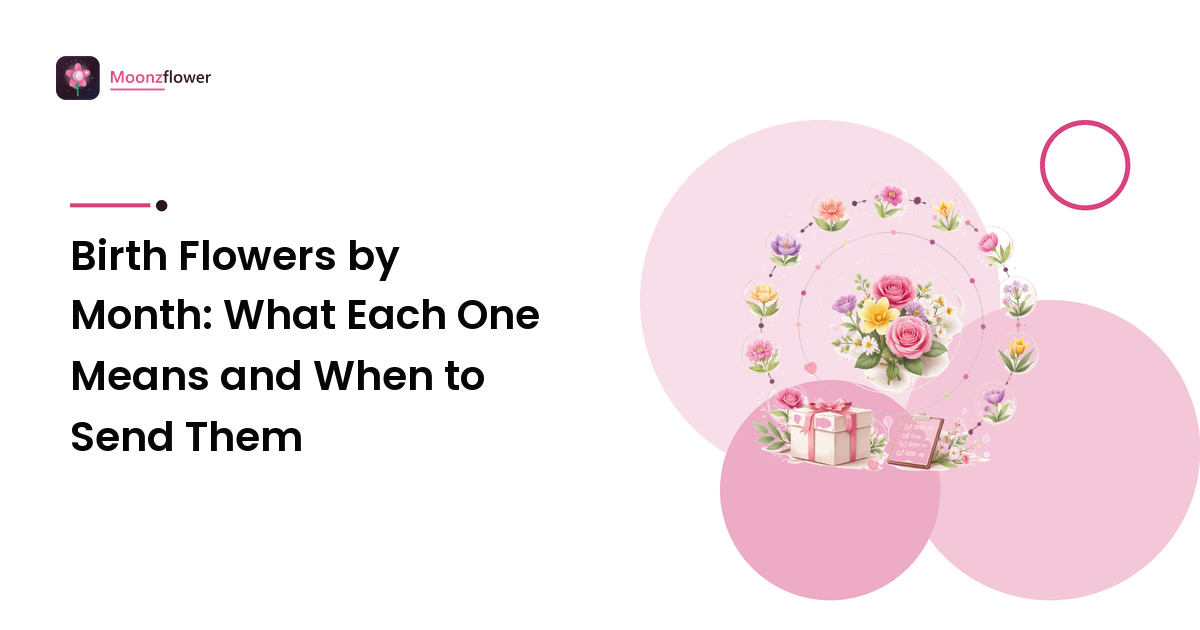
A birthstone tells someone you thought about the month they were born. A birth flower does the same thing, but softer, and it arrives already alive. For the price of an ordinary bouquet you can send a gift that quietly says this one is yours — chosen for the person rather than pulled from a bucket at the checkout. That is the appeal, and it is why birth flowers keep showing up on birthday orders long after the tradition began.
Here is the takeaway up front: every calendar month has a flower (usually two) that folklore has attached to it, each carrying a traditional meaning drawn from the old "language of flowers." Those meanings are cultural tradition, not botanical fact — but they are real, widely shared tradition, and that is exactly what makes them a warm, personal touch on a gift. Below is the flower for each month, what it has long been said to represent, and an honest note on when the meaning matters and when it simply looks lovely.
Where birth flowers come from
The idea is old and its edges are fuzzy, which is worth saying plainly. Birth flowers grew up alongside birthstones and drew much of their symbolic vocabulary from Victorian floriography — the 19th-century fashion of assigning sentiments to specific blooms so a bouquet could carry a message a letter could not. Different sources, countries, and even florists' guilds settled on slightly different lists, so you will find a month with two "official" flowers, or a bloom that means one thing in one tradition and something else in another.
None of that undercuts the gift. It just means you should treat a birth flower as a piece of shared folklore to lean into, not a fixed rule to get wrong. When a meaning is contested, the honest move is to pick the reading that fits your message and say so on the card.
Birth flowers, month by month
Each month below lists its primary traditional flower, the meaning most commonly attached to it, and a quick gifting note. Where a well-known second flower exists, it is mentioned too.
January — Carnation
The carnation carries associations of love, admiration, and distinction, and it earns its January slot in a practical way: it is one of the most reliable winter blooms and holds up for a week or more in a vase. Colour shifts the message — deep red leans toward admiration, pink toward gratitude and a mother's love, white toward pure good wishes. The snowdrop is January's gentle second flower, long tied to hope and the first sign of light returning.
February — Violet
Violets have stood for modesty, faithfulness, and quiet devotion since long before the Victorians — a good fit for a month built around loyalty and affection. They are small and understated, so they read as sincere rather than showy. Primrose is February's companion bloom, traditionally a token of young or first love, which makes the pair a thoughtful choice around Valentine's without defaulting to a dozen red roses.
March — Daffodil
Few flowers say new beginning as clearly as the daffodil, one of the first true blooms of spring and a long-standing symbol of renewal and fresh starts. There is a charming piece of folklore worth honouring: tradition holds that a single daffodil can bring misfortune, while a bunch brings joy — so send several, never one. It makes a bright, optimistic gift for a March birthday or a genuine new chapter.
April — Daisy
The daisy stands for innocence, cheerfulness, and loyal love, and its open, unfussy face suits the light-hearted spirit of the month. It is the flower to send when you want warmth without weight — a friendly, unpretentious thinking of you. Sweet pea is April's second bloom, prized for its scent and traditionally read as blissful pleasure or a graceful thank-you and farewell.
May — Lily of the Valley
Delicate and deeply fragrant, lily of the valley has long meant sweetness, humility, and the return of happiness. It is a short-season flower, which is part of its charm and its cost — it is genuinely a bloom of the moment. Handle it with care in the home, though: like several plants on this list, it is toxic if eaten, so keep it away from children and pets. Hawthorn is May's lesser-known companion, tied to hope.
June — Rose
June's flower is the rose, and no bloom carries a richer or more colour-dependent language. Red is love, pink is gratitude and admiration, white is honour and new beginnings, yellow is friendship and joy. That range is the rose's gift and its trap: send the colour, not just the flower, because the shade is the message. Honeysuckle is June's second bloom, a traditional emblem of devoted, enduring bonds.
July — Larkspur
Larkspur (delphinium) represents an open heart, positivity, and strong attachment, and its tall spires bring height and cottage-garden character to an arrangement. Colour plays a part here too — pink for fickleness, white for a joyful spirit, blue-purple for first love and grace. It is a generous, summery choice. The water lily is July's quieter symbol, associated with purity and calm.
August — Gladiolus
The gladiolus stands for strength of character, integrity, and remembrance — its sword-like stems even take their name from the Latin for sword. It is a fitting gift for someone you admire for their resolve, or to mark a milestone that took grit. The poppy is August's companion bloom, its meaning famously split between remembrance and restful sleep depending on the tradition you follow.
September — Aster
Asters bloom as summer tips into autumn and have long signified wisdom, faith, and valour, with a softer thread of love running through the folklore. Their daisy-like, star-shaped flowers make them an easygoing gift with a thoughtful reputation. Morning glory is September's second flower, traditionally a token of affection — and, fittingly, of the fleeting nature of a single day.
October — Marigold
Marigolds carry warmth, creativity, and devotion, though their meaning travels: in Mexican tradition they are the flowers of remembrance central to Día de los Muertos, honouring those who have passed. That dual reading is a good reminder to know your recipient's context. Cosmos is October's second bloom, associated with order, harmony, and peace — a calm counterpoint to the marigold's fire.
November — Chrysanthemum
The chrysanthemum means friendship, joy, and long life across much of the world, and its late-season hardiness makes it one of autumn's most generous cut flowers. But it is the clearest example on this list of meaning changing by culture: in parts of Europe and East Asia, chrysanthemums are strongly associated with mourning and funerals. Send them cheerfully at home, and check the local reading before sending them abroad.
December — Narcissus
December's flower is the paperwhite narcissus, a fragrant winter bloom traditionally read as hope, good wishes, and you are the only one — a warm sentiment for the year's end. Holly and poinsettia are its festive companions, tied to the season more than to a single meaning. As with lily of the valley, keep narcissus bulbs and poinsettia away from curious pets.
How to give a birth flower well
The meaning does the emotional work, but the gift still has to arrive as a good bouquet. A few habits make the difference.
- Lead with the person's month, then adjust for the message. Start from their birth flower, but let colour and companions carry the exact sentiment — a June rose in yellow for a friend, in red for a partner.
- Say the meaning on the card. The whole point is lost if the recipient does not know why you chose it. One line — "Larkspur for July, and for an open heart" — turns a nice bouquet into a personal one.
- Mind the season. Birth flowers are tied to when they naturally bloom, so a few (lily of the valley, peony-season overlaps) are easiest and cheapest near their month and pricier out of it. A florist can suggest an in-season stand-in that keeps the meaning.
- Set it up to last. A meaningful bouquet deserves a long life — a clean vase, a fresh trim, and a cool spot go a long way, as covered in our cut-flower care guide.
For the full logic of matching flowers to occasions and timing a delivery, our flower gifting guide covers the etiquette in depth.
When the meaning matters — and when it doesn't
It is worth being relaxed about all of this. Birth-flower meanings are lovely tradition, not a test. If your recipient delights in symbolism, a well-chosen bloom with its meaning noted is a genuinely personal gift. If they simply love flowers, the birth-flower angle is a nice story that need not be spoken at all — a gorgeous bouquet is never the wrong answer.
The one place to pay attention is cross-cultural gifting, where a flower's meaning can flip. Chrysanthemums, marigolds, and even certain colours read very differently from one country to the next. When in doubt, favour the reading you can explain warmly on a card, and skip any bloom whose local meaning you are unsure of. Sincerity, clearly expressed, always outperforms a symbol nobody decodes.
Frequently asked questions
What if two flowers are listed for my birth month? That is normal — the tradition never fully standardised, so many months carry a primary and a secondary flower. Treat it as a choice, not a contradiction: pick the one that is in season, easier to find, or whose meaning better fits your message.
Are birth flower meanings actually official? No, and it is worth being honest about that. They come from folklore and Victorian floriography rather than any single authority, and lists vary by source and country. They are shared cultural tradition — meaningful and fun to lean into, but not fixed rules.
Do birth flowers change from country to country? Yes. Both the flower assigned to a month and the sentiment attached to a bloom can differ between traditions, and some meanings even reverse — a celebratory flower in one culture can be a funeral flower in another. If you are sending across borders, check the local reading first.
Can I plant my birth flower instead of buying cut stems? Often, yes — many birth flowers are common garden plants, and a potted or planted version makes a gift that returns each year around the recipient's birthday. Just match the plant to their climate and the light they can actually give it.
Is the birth flower the same idea as a birthstone? They are cousins. Both assign a symbol to each month and grew up alongside each other, but flowers add a living, seasonal element a stone can't — and, unlike a stone, they are tied to when the plant naturally blooms.
Birth flowers turn a birthday bouquet into something chosen, and the meaning is half the pleasure of giving one. Before you send, look up any month's bloom and its traditional meaning in the full birth-flower reference on Moonzflower — a dedicated page for every month, with the fact and the folklore kept clearly apart.